


Amid the accelerating transformation of the global new energy vehicle (NEV) industry, the requirements for automotive components are undergoing profound changes. Lightweight design to enhance driving range and high-performance standards to ensure safety have become two core indicators of competitiveness in NEVs. Against this backdrop, CNC machining for automobile parts and cnc auto parts, as key manufacturing processes, are achieving precise adaptation to diversified NEV demands through technological innovation and process optimization—driving the automotive industry toward greater efficiency and sustainability.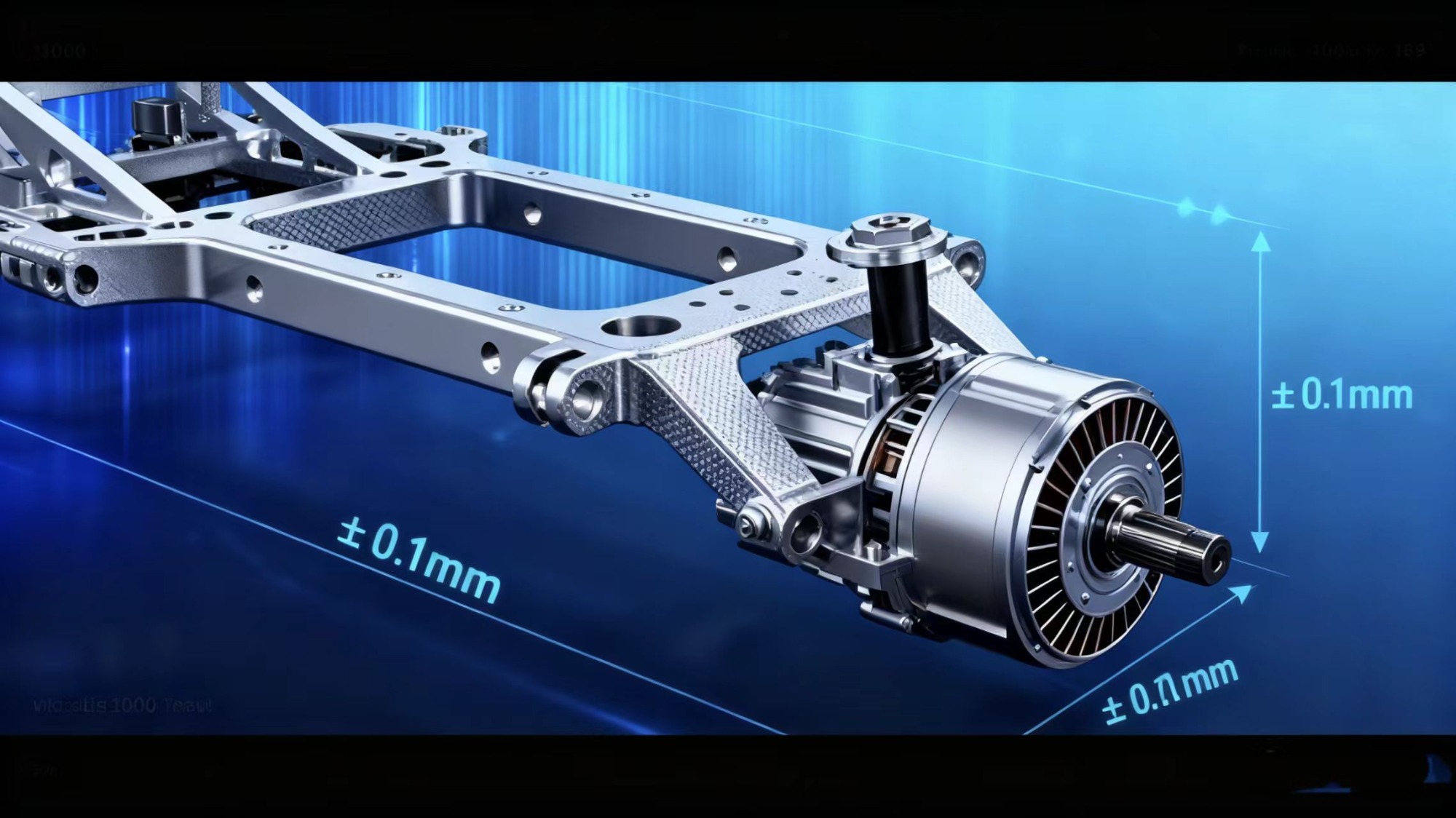
The NEV industry’s pursuit of longer driving range has directly propelled technological advancements in lightweight components. Traditional steel materials, with their high density and energy consumption, are gradually being replaced by lightweight alloys such as aluminum and magnesium. The precision machining of these materials heavily relies on CNC machining for automobile parts.
CNC machining for automobile parts demonstrates unique advantages in processing lightweight materials. Take aluminum alloy as an example: although its low density significantly reduces vehicle weight, it is prone to deformation during machining. This imposes strict requirements on tool accuracy and cutting parameters. Professional cnc auto parts manufacturers optimize high-speed cutting techniques, using carbide tools and coordinated cooling systems to prevent overheating-induced deformation while maintaining dimensional tolerance within ±0.01 mm. This ensures perfect precision for critical NEV components such as chassis and battery brackets. For cost control in aluminum alloy machining, the article (“How to Reduce CNC Machining Costs for Aluminum Housings”) provides detailed process optimization strategies, offering valuable reference for improving material utilization and reducing waste.
In terms of material utilization, CNC machining for automobile parts leverages computer-simulated tool paths to maximize raw material efficiency. According to data from a leading NEV manufacturer, after adopting five-axis CNC machining technology, the material utilization rate of aluminum alloy components increased from 60% to over 85%, reducing production costs and industrial waste while aligning with NEVs’ environmental principles. This highly efficient machining mode allows cnc auto parts to maintain a central role in the lightweighting trend. For a deeper understanding of the principle and application of five-axis machining, refer to (“What Is Five-Axis Machining”), which provides a professional analysis of how this technology enables complex component fabrication.
It is worth noting that lightweighting is not simply about reducing weight—it is about ensuring structural strength while doing so. Through precision milling and turning, CNC machining for automobile parts can create intricate reinforcing rib structures on thin-walled components, improving the impact resistance of aluminum parts by over 30%. This “weight reduction without quality compromise” approach is a key reason why cnc auto parts have rapidly gained popularity in the NEV sector.
As the industry upgrades, NEV powertrains and control systems demand far higher performance standards than conventional vehicles, posing new challenges for the accuracy and stability of cnc auto parts. For instance, if the rotor’s concentricity deviation exceeds 0.02 mm, it may cause severe vibration during operation, directly affecting both range and safety. The article (“What Is Concentricity”) systematically explains the detection standards and control methods, serving as a valuable technical reference for precision management in cnc auto parts manufacturing.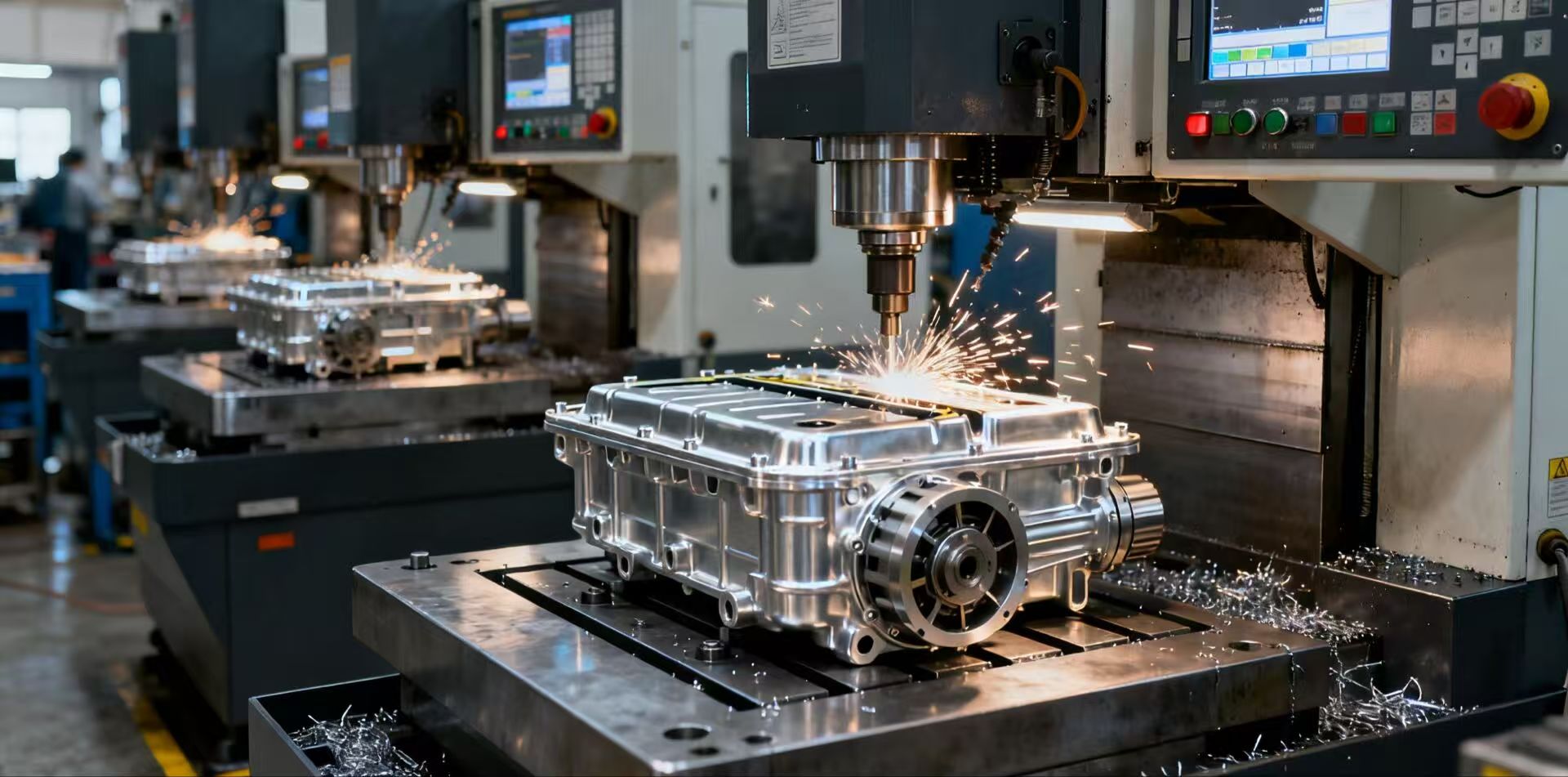
Manufacturers of cnc auto parts establish comprehensive quality control systems by introducing high-precision testing equipment. The application of coordinate measuring machines (CMM) allows real-time monitoring of critical dimensional parameters, ensuring that every batch of cnc auto parts meets design specifications. Meanwhile, CNC machining for automobile parts adopts constant-temperature workshops, keeping environmental variations within ±2 °C to effectively prevent thermal expansion-induced deviations. This strict production environment management enables product qualification rates exceeding 99.5%.
In surface treatment for high-performance components, CNC machining for automobile parts integrates anodizing and electroplating processes to significantly enhance wear and corrosion resistance. For example, NEV charging connector components undergo hard anodizing after precision CNC machining, achieving surface hardness above HRC 50 and tripling the service life compared to conventional methods—perfectly fitting high-frequency plug-in usage scenarios.
Furthermore, the high performance of cnc auto parts is also reflected in their customization capability. To meet the diverse requirements of various NEV power systems, CNC machining for automobile parts can quickly adjust machining parameters, realizing seamless transitions from prototyping to mass production. One NEV startup, through collaboration with a professional cnc auto parts supplier, completed the entire process—from motor housing design to mass production—within 45 days, cutting the industry-average cycle by 50% and gaining a valuable first-mover advantage.
The rapid growth of the NEV sector also relies heavily on close collaboration across the industrial chain. As the bridge between raw material supply and vehicle assembly, CNC machining for automobile parts promotes efficiency through technological collaboration and innovative business models.
In cooperation with material suppliers, cnc auto parts manufacturers participate in the R&D of new alloy materials, offering optimization suggestions based on machining performance. For example, to meet the needs of NEV battery housing fabrication, they jointly developed aluminum alloys with high thermal conductivity, ensuring both excellent machinability and rapid heat dissipation during battery operation. This “manufacturing-driven R&D” model accelerates the industrialization of new materials.
Integration with automakers mainly occurs through digital connectivity. CNC machining for automobile parts companies introduce MES systems to synchronize with OEM ERP systems, allowing automakers to monitor real-time machining progress and quality data—greatly improving supply chain responsiveness. When design adjustments are required, cnc auto parts manufacturers can quickly update tool paths via CAD models, completing process adjustments within 48 hours—a flexibility unmatched by traditional manufacturing modes.
Moreover, CNC machining for automobile parts collaborates with downstream inspection agencies to establish joint laboratories, co-developing testing standards for NEV components. By sharing equipment and data, cnc auto parts can shorten quality certification cycles by 30% while promoting continuous upgrades of industry standards. This full-chain synergy enables CNC machining for automobile parts to play an even greater role in the NEV transformation.
As NEVs evolve toward intelligence and connectivity, cnc auto parts face both new challenges and opportunities. Components such as high-precision sensor brackets for autonomous driving systems and automotive-grade chip heat sinks require micrometer-level machining accuracy, pushing CNC machining for automobile parts toward ultra-precision and complex-geometry processing.
The widespread adoption of five-axis machining enables cnc auto parts to achieve complex surface fabrication that was previously impossible with traditional methods. For instance, NEV LiDAR housings require multiple precision holes on irregular surfaces. With multi-axis coordinated motion, five-axis CNC equipment completes all operations in a single setup—boosting efficiency and eliminating cumulative errors caused by repeated clamping.
Intelligent machining is another key development direction for CNC machining for automobile parts. By embedding AI algorithms, systems can analyze vibration and temperature data in real time, automatically adjusting cutting parameters to ensure consistent quality. According to one cnc auto parts factory, after adopting intelligent manufacturing, equipment failure rates dropped by 40%, and single-part machining time decreased by 15%, greatly improving productivity.
Additionally, CNC machining for automobile parts is integrating with emerging technologies such as 3D printing to create an integrated “additive + subtractive” manufacturing process. For complex NEV components, a 3D-printed blank is first produced and then precision-finished by CNC machining—shortening lead times while maintaining cnc auto parts’ hallmark precision. This innovative integrated process provides strong support for rapid product iteration in the NEV industry.
The transformation of the NEV industry has created unprecedented growth opportunities for CNC machining for automobile parts and cnc auto parts. From lightweight material machining to high-performance quality assurance, from industrial chain collaboration to technological innovation, CNC machining for automobile parts is evolving comprehensively to help NEV manufacturers overcome production bottlenecks.
If you are seeking reliable component machining solutions for your NEV project—whether to learn more about CNC machining for automobile parts technologies or to customize high-performance cnc auto parts—please contact vanmodel.com today. As an industry-leading precision manufacturing service provider, we offer professional technical expertise, advanced machining equipment, and a robust quality management system to support your project from design to mass production—driving green transformation and technological advancement in the automotive industry together.


