In today's rapidly developing manufacturing industry, molds, as the "mother machines" of product production, directly determine the precision, performance, and production efficiency of downstream products. Especially in the fields of high precision plastic injection molding and medical injection molding, the quality of molds is crucial to product safety and corporate competitiveness. So, what acceptance criteria must a good mold meet? This article will elaborate from multiple dimensions to provide references for industry practitioners.
1. Dimensional Accuracy: The Core Requirement of high precision plastic injection molding
For molds, dimensional accuracy is the primary acceptance criterion, especially in the field of high precision plastic injection molding, where even a tiny error can lead to the scrapping of an entire batch of plastic parts. A qualified mold must have the dimensional error of its molded parts controlled within the design requirements, usually reaching ±0.01mm or higher precision.
During acceptance, precision equipment such as coordinate measuring machines are used to conduct a comprehensive inspection of the key dimensions of the mold, including the diameter, depth, and positional tolerance of the cavity and core. high precision plastic injection molding has extremely high requirements for dimensional stability. After multiple mold opening and closing cycles, the mold must maintain the consistency of dimensional accuracy to avoid dimensional deviations of plastic parts due to thermal expansion and contraction or mechanical wear.
For example, in the production of automotive electronic components, high precision plastic injection molding molds must ensure the precision of the pin holes of connectors; otherwise, it will lead to poor assembly of parts. In the medical device field, dimensional errors in catheter fittings made by high precision plastic injection molding may affect fluid transmission efficiency and even endanger patient safety. Therefore, strict control of dimensional accuracy is the "first checkpoint" for the acceptance of high precision plastic injection molding molds. To gain a deeper understanding of technical details in the field of high-precision injection molding, you can refer to "High Precision Plastic Injection Molding and PPO Material Properties".
2. Material Performance: The Safety Bottom Line of medical injection molding
The material selection and performance of molds are directly related to their service life and application scenarios, especially in the field of medical injection molding, where the safety and stability of materials are of paramount importance. During acceptance, comprehensive testing of the mechanical properties, corrosion resistance, and heat resistance of mold materials is required.
medical injection molding molds often come into contact with medical-grade plastic raw materials (such as PE, PP, ABS, etc.), and some production environments need to withstand high-temperature sterilization or chemical cleaning. Therefore, mold materials must have excellent corrosion resistance and thermal stability. Usually, medical injection molding molds use high-quality mold steels such as S136 and 718H. After special heat treatment, these materials can reach a hardness of HRC35-45, which not only ensures the wear resistance of the mold but also avoids contamination of medical device plastic molding products due to impurity precipitation from the material.
In addition, the uniformity of the material cannot be ignored. If there are defects such as pores and cracks in the mold blank, it will lead to early failure due to stress concentration during use, which is a great safety hazard for medical injection molding. Therefore, during acceptance, ultrasonic flaw detection and other methods are used to detect the internal quality of the material to ensure that the material performance of medical injection molding molds fully meets industry standards. For more advantages of medical injection molding, you can check "Advantages of Medical Injection Molding: High-Precision Medical Device Molding".
3. Surface Quality: A Key Factor Affecting Product Appearance and Performance
The surface quality of the mold is not only related to the appearance of plastic parts but also affects their demolding performance, corrosion resistance, and service life. During acceptance, strict inspection of the surface roughness, flatness, and glossiness of the mold cavity and core is required.
In high precision plastic injection molding, the surface roughness of the mold needs to be controlled between Ra0.02-0.8μm. An overly rough surface will cause scratches and shrinkage marks on the surface of plastic parts, affecting product appearance; while an overly smooth surface, if not handled properly, may lead to demolding difficulties and reduce production efficiency. For medical injection molding, the smoothness of the mold surface is directly related to cleanliness - a rough surface is prone to residual raw material debris or bacteria, which is difficult to clean thoroughly, thus affecting the sterility of medical device plastic molding.
In addition, the surface treatment process of the mold must also meet the requirements. For example, medical injection molding molds often use chrome plating to enhance surface hardness and corrosion resistance; while high precision plastic injection molding molds may require mirror polishing to ensure the optical performance of plastic parts meets the standard. During acceptance, quantitative detection is carried out by equipment such as surface profilometers and gloss meters to ensure that the surface quality meets the design standards. To learn more about the basic content of mold surface treatment, you can read "Injection Mold Science Popularization - Introduction to Plastic Injection Molds".
4. Structural Stability: The Foundation for Ensuring Production Continuity
Whether the structural design of the mold is reasonable and whether it operates stably is an indispensable link in acceptance. A good mold must operate smoothly without jamming during the mold opening and closing process, with precise coordination of various components, and be able to adapt to long-term continuous production needs.
During acceptance, a test mold run is required to observe whether the guiding mechanism (guide pillars, guide sleeves) of the mold wears evenly, whether the ejection mechanism is synchronized, and whether the core-pulling mechanism is flexible. For large part injection molding molds, structural stability is particularly important - large molds are heavy and subject to complex forces. If the structural design is unreasonable, deformation, fracture, and other problems may occur during production, leading to production line shutdowns.
In the production scenarios of automotive component manufacturers, the structural stability of the mold directly affects the production . For example, if the large part injection molding mold for automobile bumpers has too long mold opening and closing time or inaccurate positioning, it will seriously reduce production efficiency. In medical injection molding, structural instability may lead to poor mold sealing, causing raw material leakage, polluting the production environment, and even affecting the quality consistency of medical device plastic molding. For a detailed analysis of mold structures, you can refer to "Introduction to a Set of Injection Molds".
5. Service Life: An Important Indicator for Measuring Mold Cost-Effectiveness
The service life of the mold is one of the core indicators for measuring its cost-effectiveness. During acceptance, the expected service life must be evaluated according to factors such as mold type, material, and application scenario.
high precision plastic injection molding molds, which need to maintain high precision, usually have a service life based on the "number of qualified products produced", generally requiring more than 500,000 mold cycles. medical injection molding molds, due to higher requirements for cleanliness and precision, may wear faster. During acceptance, it is necessary to ensure that they can stably produce qualified medical device plastic molding products within the specified number of mold cycles.
The maintainability of the mold also affects its actual service life. During acceptance, it is necessary to check whether the vulnerable parts of the mold (such as ejector pins, springs) are easy to replace, and whether the oil and gas circuits are reasonably arranged, so that they can be quickly repaired during subsequent maintenance to extend the overall service life of the mold. For low volume injection molding companies, the service life of the mold can be appropriately reduced, but it must still meet the stability requirements of small-batch production.
6. Test Mold Results: The Final Inspection of Acceptance
No matter how well the various parameters of the mold meet the standards, the final quality must be verified through the test mold results. During the test mold, it is necessary to use the actual production raw materials and process parameters to continuously produce a certain number of plastic parts, and infer the mold performance from the product quality.
The key points of test mold acceptance include: whether the dimensional accuracy of plastic parts is stable, whether the surface has defects (such as flash, bubbles, depressions), and whether the structure is complete (such as whether threads and buckles are well formed). For medical injection molding test molds, special indicators such as product biocompatibility and sterility must also be tested to ensure compliance with medical industry standards.
During the test mold process, if problems such as excessive dimensional fluctuations of plastic parts and difficult demolding occur, it indicates that the mold may have design defects or processing errors, which need to be returned for adjustment and re-acceptance. Only when the plastic parts produced by the test mold fully meet the drawing requirements can the mold pass the final acceptance. For the complete process of test molding, you can refer to "Injection Molding Process Flow".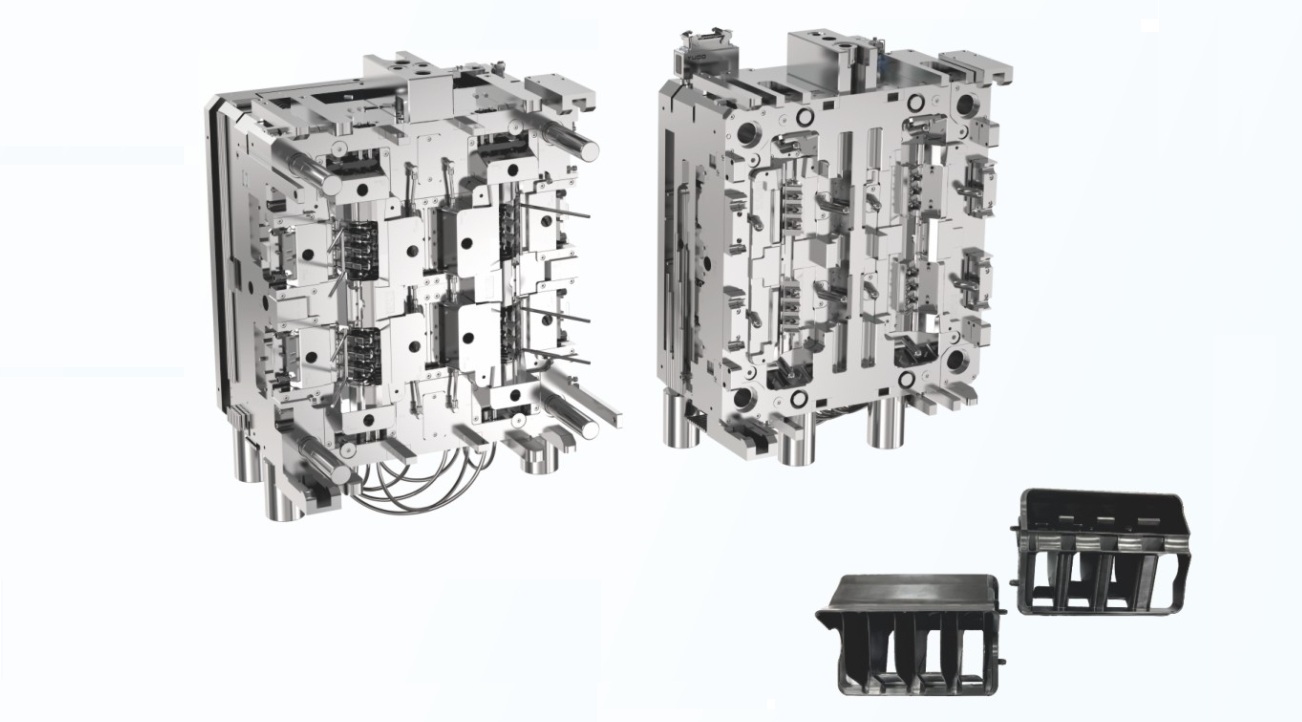
Conclusion
A good mold is the prerequisite for achieving high-quality production in fields such as high precision plastic injection molding and medical injection molding. From dimensional accuracy to material performance, from surface quality to structural stability, each acceptance criterion is related to the actual use effect of the mold. Both professional mold enterprises such as industrial molding corp and injection mold inc, and downstream users such as automotive component manufacturers and medical injection molding companies, must attach importance to the mold acceptance link to gain an advantage in the fierce market competition.
If you are looking for mold solutions that meet the above high standards or need professional mold acceptance guidance, please contact vanmodel-sheet metal immediately. We will provide you with customized technical support and services to help your production efficiency and product quality reach a new level.


